Get 12x12 Patio Cover for $5,537 + Tax
Light up your nights outdoors.
The Right Lighting Turns Your Deck Into a Nighttime Retreat in Shelbyville, TN
Pergola and Deck Lighting in Shelbyville, TN That Works After Sunset
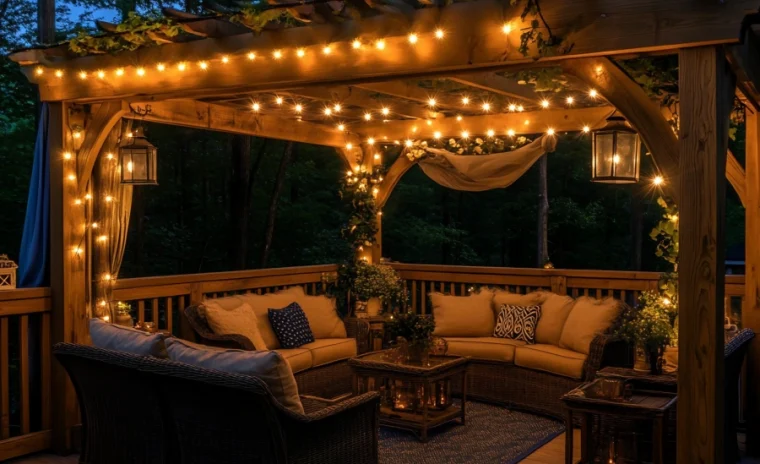
Light up your nights outdoors.
Pergola and Deck Lighting in Shelbyville, TN That Works After Sunset
Shelbyville and the broader Middle Tennessee region enjoy long stretches of warm evenings from late spring through early fall, and that seasonal window is exactly when outdoor spaces earn their keep. When the heat of a July afternoon finally fades around eight o’clock at night, the deck or pergola becomes the most-used room in the house. Without adequate lighting, that opportunity disappears the moment the sun sets behind the tree line.
Outdoor lighting does far more than push back the darkness. It defines the boundary between a space that feels finished and one that feels incomplete. A well-lit deck signals to guests that the evening is just beginning, while a dark pergola signals that it is time to move inside. In a community where backyard entertaining is a genuine part of local culture, that distinction matters.
Safety is the first argument for any outdoor lighting plan. Steps, grade changes, and the edges of elevated decks all become hazards in low-light conditions. Tennessee summers also bring sudden storms that leave wet surfaces behind, and even a slight drop in visibility can turn a familiar path into a slip-and-fall risk. A thoughtful lighting layout eliminates those hazards before they become incidents.
Ambiance is the second argument, and it carries just as much weight for homeowners who want to get real value from their outdoor living spaces. The right combination of fixtures and color temperatures can make a standard pressure-treated deck feel like a destination and can transform aluminum pergolas or wooden pergolas into evening focal points that extend the entertaining season well into autumn. Exploring the full range of outdoor lighting ideas for decks and pergolas is the logical first step toward making that happen.
Once a homeowner understands the value of outdoor lighting, the next question is which fixture types will actually deliver. The answer depends on the zones within the space: overhead coverage, task areas, perimeter definition, and accent points each call for a different approach.
String lights remain one of the most versatile options for pergola beams and overhead structures. Edison-style bulbs strung across the rafters of aluminum pergolas or wooden pergolas produce a warm, festive glow that works equally well for a quiet dinner and a larger gathering. Contemporary LED versions of these bulbs use a fraction of the energy of traditional incandescent versions and handle Tennessee’s humidity without the corrosion issues that plague lower-quality fixtures.
Recessed deck lights set flush into stair risers and deck boards solve the safety problem without cluttering the visual field. Because they sit below the walking surface, they illuminate the path without producing glare that would interfere with conversation or views. Post cap lights serve a complementary purpose by marking the perimeter of the deck and providing a consistent light level across the entire space.
For pergola structures paired with a louvered patio cover or motorized patio screens, integrated fixture channels built directly into the frame allow for a clean, architectural look with no exposed conduit or surface-mounted hardware. Spotlights and low-voltage path lights positioned at the base of the structure draw the eye upward and reinforce the form of the pergola itself, adding depth to the overall composition after dark.
Color temperature is a detail that separates a mediocre lighting plan from a great one. Warm white fixtures in the 2700K to 3000K range create the relaxed, inviting atmosphere most homeowners are after. Cooler temperatures work better in task-oriented zones such as outdoor kitchens or bar areas where visual clarity matters more than mood. Layering both temperatures across the same outdoor living space produces a nuanced result that feels intentional rather than accidental.
Even the best fixture selection produces disappointing results when the installation is handled without a clear plan. Power source, weatherproofing, and zone layout are the three variables that determine whether an outdoor lighting system performs well for years or requires constant maintenance.
Low-voltage systems running on a 12-volt transformer are the most practical choice for most residential deck and pergola projects. They are safer to work around than line-voltage systems, easy to expand as the space evolves, and compatible with the timer and dimmer controls that make an automated lighting schedule possible. A transformer positioned near an exterior outlet can support a surprisingly large number of fixtures without requiring a dedicated electrical circuit.
Line-voltage fixtures, by contrast, are appropriate where higher brightness levels are genuinely needed, such as in a fully equipped outdoor kitchen or a covered space that doubles as a workshop. These installations require permits and licensed electrical work in most Tennessee jurisdictions, so factoring that cost and timeline into the project budget from the beginning avoids surprises later.
Weatherproofing ratings deserve careful attention in Middle Tennessee’s climate. The region sees its share of summer thunderstorms and occasional winter ice, and fixtures rated only for dry locations will fail quickly in an exposed environment. Look for a minimum IP65 rating on any fixture that will be exposed to direct rainfall, and step up to IP67 for fixtures set into horizontal deck surfaces where standing water can collect.
Zoning the system by function adds meaningful flexibility. Separating the perimeter and stair lighting from the overhead ambiance fixtures, and separating both from any accent or feature lighting, allows different scenes to be activated depending on the occasion. A dimmer-controlled overhead string light zone combined with fully illuminated stair lighting covers the practical needs of a large gathering, while a single low-level zone is sufficient for a quiet evening. This kind of layered control is a standard consideration when designing outdoor living areas that need to serve multiple purposes throughout the week.
Lighting design for decks and pergolas follows the same principles that govern any well-composed interior space: contrast, hierarchy, and intention. A flat, uniform level of light across every surface produces a result that feels more like a parking lot than a retreat. The goal is a composition where some areas are brighter, some are darker, and the transitions between them feel deliberate.
Uplighting is one of the most underused tools in outdoor lighting ideas for decks and pergolas. Placing low-wattage fixtures at the base of pergola columns or at the foot of surrounding plantings creates vertical light that draws the eye upward and adds dimension to what would otherwise be a flat, two-dimensional space. When wooden pergolas or aluminum pergolas are lit from below, the structural members themselves become a visual feature rather than a neutral backdrop.
Shadow play is the other side of that coin. Intentional shadow, created by placing a fixture at a sharp angle to a textured surface such as a cedar beam or a stone column, adds tactile depth to the space without any additional hardware. This technique works particularly well on pergola structures where the grid of the overhead frame is already a compelling visual element.
Furniture arrangement and lighting layout should be developed in parallel rather than in sequence. A dining zone, a conversation area, and a circulation path each have different brightness requirements, and the fixture plan should reflect those differences. Placing a pendant or a cluster of overhead fixtures directly above the dining table anchors that zone within the larger space and signals its purpose to anyone stepping outside.
Finish consistency between the fixtures and the hardware already present on the deck or pergola, including post hardware, railing components, and door handles, creates a coherent result that feels like a finished design rather than a collection of separate decisions. Matte black and oil-rubbed bronze both perform well against the natural wood tones common in custom decks and pergola structures throughout the region.
Lighting is most effective when it is designed as part of the structure rather than added to it after the fact. A deck or pergola that is built with conduit channels, recessed fixture boxes, and planned outlet locations gives the homeowner far more flexibility than one where lighting has been retrofitted to an existing frame. That is a planning conversation worth having before construction begins, not after.
The specific demands of Middle Tennessee’s outdoor season reinforce this point. Homeowners in Shelbyville and surrounding communities from Murfreesboro to Columbia tend to use their outdoor spaces heavily from April through October, and many extend that window with patio cover installers adding covered structures that keep the rain off during spring and fall evenings. When those structures are designed with integrated lighting from the start, they deliver a noticeably more polished result at a lower total cost than a two-stage approach.
There is also a material interaction to consider. Composite deck boards, pressure-treated decking, and concrete flatwork each reflect and absorb light differently. A lighting plan that works well on a light-toned composite surface may need to be recalibrated for a darker wood or a stained concrete patio. Thinking through outdoor lighting ideas for decks and pergolas in the context of the specific materials in the project produces a result that actually performs as expected once the sun goes down.
If you are planning a new deck, pergola, patio cover, or any other addition to your outdoor living space and want to build lighting into the design from the beginning, the team at our contact page is available to discuss your project. We work with homeowners across the Shelbyville, TN area to design and build outdoor living spaces that function well day and night, and we are glad to help you think through how lighting fits into the larger picture of your project.